Friday, May 30, 2014

New Investigative Series Wants to Help You Settle The Score!

Exciting New Investigative Series Wants to Help You Settle The Score!

Have you been the victim of a bait & switch?
Have you been stung by a scammer?
Have you been duped by an online seller, shamed on the internet or outright ripped off by someone on social media?

The internet is something we use everyday...but dangers lurk everywhere.
Online thieves, con artists, shysters & scammers are having a heyday, and their crimes are often too small scale to call the cops or file an expensive & time consuming lawsuit.
You don't know where to go, or who to turn to...so turn to us.

If you've been burned by an online thief, if you've 'clicked this link' and ended up losing money, or had your reputation tarnished by a facebook or Yelp type post, then this is your chance to stand up & let your frustration be heard!

New TV Series for a Major Cable Network wants to help you find the perp, settle the score, and get even.
We'll find out what happened, what went wrong, and chase down the person you think is guilty.

Please send an email to LetsEvenTheScore@gmail.com and tell us your story!
And please tell them that Shawn from Scam Victims United sent you!

Sunday, April 7, 2013

A Primer on Foreclosure Rescue Scams


Guest blog post
By Sarah Parr

Foreclosure rescue scam artists are some of the most heartless “businessmen” in the United States today. They entice desperate homeowners who fear losing their home with encouraging words and promised results, then run off with their money, their home or worse, both. Scam artists may look through foreclosure notices posted in public media and target clients from areas known as centers of foreclosure activity. They use common and widespread advertising methods to attract clients: fliers, radio ads, billboards, etc.

Foreclosure rescue and mortgage relief scams have proliferated in recent years, with an estimate of billions of dollars lost. There are three general schemes to look out for that could signal a foreclosure rescue or mortgage relief scam.

Upfront costs
Consumers often report unethical companies that charge clients for access to government programs and housing counseling. Qualification of specific government programs that aid in the loan modification process or foreclosure defense is free. It is also free to speak with a government agency-approved housing counselor, according to PreventLoanScams.org. Information on the latest government program or agency-licensed housing counseling can be found easily on the Internet. Additionally, a company could be fraudulent if it asks for a large amount of money upfront for access to the latest government program or a recent mortgage settlement. Homeowners should also watch out for companies that advise homeowners to pay mortgages to them and not to the loan provider.

Promise of definite results
Aid against foreclosure or the reasonable modification of a loan is never guaranteed, and access to specific government programs may only be available for certain borrowers. Alas, scam artists will do anything to convince consumers that loan modifications and foreclosure defense carried out by their company are guaranteed. A scam artist will almost always pose as a member of a fake organization licensed by, or affiliated with, the government and claim that a homeowner qualifies for a specific government program that aids in homeowner relief.

So-called professionalism
Scam artists will try any scheme to appear authentic and reliable. Non-attorneys often pose as attorneys from law firms that only offer loan modification services, reports the New York Times. Some law firms even disguise as non-profit groups that offer loan workouts or forensic loan audits. Consumers should be distrustful of these lawyers, especially because most law firms provide loan modifications as one of many services and loan workouts and audits have been proven useless.

Another kind of phony professional, in a “bait and switch” tactic, may convince a client to quickly sign paperwork that signs their rights to their house away and gives them to the scam artist. Others act generous and suggest the owner sign away the house, but stay in it until he or she has recovered financially. They will reassure the former homeowner that he or she will be able to reclaim the house once he or she has improved money-wise. However, the scam artist will be able to evict the victims and claim the home.

People on the verge of losing their home should be cautious of the common schemes covered above. Also, homeowners who would like a loan modification or who are at risk of foreclosure should never avoid any communication from their lender. Free housing counseling is provided by government agency-certified housing counseling agencies, or by contacting the Homeowners’ HOPE Hotline.

Saturday, April 6, 2013

Fraud is always prevalent where money is exchanged, especially in Forex

The Internet has been the great facilitator of change over the past decade, but it has also enabled many disparate consequences, as well. Whether we like it or not, there is a criminal element in our society that is always poised to use technology to separate us from our hard-earned money. Trading the world’s currencies over the Internet has been another area that has experienced explosive growth and popularity over this same decade, but fraudsters have been present every step of the way.

 Any service that involves money will attract organized crime, and foreign exchange was no different. Fraudulent brokers were the largest problem, but the Commodity Futures Trading Commission (CFTC) stepped in and began ridding the market of fraudsters, regulating the forex market at large, and educating consumers as to the pitfalls and opportunities of forex trading. (For more info, go to ForexFraud.com). 

Despite performing a yeoman’s task, the CFTC, like other regulators, has a limited budget. They have reduced fraud to an acceptable level, but it still persists. Every investor should always be skeptical and cautious, especially since your so-called business partners on the Internet are anonymous and face-less. More due diligence is necessary, and awareness will always be your first line of defense. Here are a few tips on what to be wary of:

 • Unscrupulous Brokers: The CFTC has not eliminated all of the crooks. Beware of hard-to-believe marketing claims, especially from overseas brokers. Imagine trying to enforce your rights in another national jurisdiction. It would be a nightmare. Only deal with highly regulated, reputable domestic brokers that have been in the business for quite a while (For more info on forex broker reviews, click here);

 • High Yield Investment Programs (HYIP): This term is nothing more than a substitute for a Ponzi scheme. Potential investors are promised outrageous returns on a monthly basis, as if that were truly possible. Greed takes over, and the “mark” makes an initial deposit. He will be shown great early results on sophisticated looking reports with pictures of electronic trading rooms to seal the deal, causing him to recommend this wonderful service to his entire network of family and friends. There are no returns. There is no trading room. It is all a scam;

• Marketing of other Forex Services: From signal sellers to automated software to managed funds, you will hear marketing claims designed to get your adrenalin pumping immediately in your veins. Watch Out! There is no perfect system, “Holy Grail” technique, or super efficient fund manager out there. This fact, however, does not stop these folks from selling whatever beautifully sounding service or product offering they have that will revolutionize your trading experience and make you a millionaire over night.

 Did you notice the common thread in all of these scams? Every one of these approaches preys upon our desire to get rich quick. Greed is the motivating factor. If it sounds too good to be true, it most likely is. Forex trading is high risk and difficult. Currency traders must be wary of anyone that pretends otherwise.

Tuesday, November 13, 2012

Give To The Max

With Thanksgiving coming up next week, many people are counting their blessings and looking at all of the things they are thankful for.  One way to show that you are thankful for what you have is to help others out.

November 15th, 2012 is Give To The Max Day.  Here is a statement from the Give To The Max website

Give to the Max Day was created in 2009 to increase giving to nonprofit organizations across the state and move more giving online. It is a day for Minnesotans to come together to raise as much money as possible for nonprofits and schools in 24 hours – starting at midnight on November 15, 2012 through midnight on November 16, 2012. By engaging as many donors as possible to give to their favorite Minnesota charities in one day – Give to the Max Day — GiveMN.org is showcasing Minnesota’s unparalleled generosity to the world!
We at Scam Victims United encourage you to Give To The Max.  You can donate to Scam Victims United and help to educate other about scams and fraud.

Saturday, March 10, 2012

How to Determine if an Online Institution is Credible

Guest Blog Post by Brittany Lyons ~ 


--------------------------------

According to a November 2011 study by Babson Survey Research Group, more than 6.1 million students enrolled in at least one web-based class in 2010, an increase of more than 10 percent from the previous year. Online degrees offer educational credentials from the comfort of one’s living home—but experts say the convenience carries substantial risk. Fraudulent institutions that offer worthless degrees pose a threat to well-meaning young people who hope to receive a real education.

The Better Business Bureau (BBB) reported that e-learning scams have snared hundreds of victims. Typically, these “schools” offer university and high school diplomas for cash. Students complete courses and receive a certificate in the mail, only to be told it holds no academic value by admission offices, employers and military recruiters. Unfortunately these “diploma mills” that have become more prevalent as online student numbers rise.

However that is not say all schools found online are scams. The BBB acknowledges that many online institutions are reputable and offer legitimate services, providing some students who may not otherwise been able attend school in a traditional setting an opportunity to enhance their education. BBB spokesman Steve Cox points out, “Education is one of the keys to advancing in life and having a diploma or advanced degree can certainly make a difference when it comes to getting into college or landing a higher-paying job.”

If a student does decide to attend an online school, a resource for accredited online PhD degrees explains that it is important for the student to thoroughly investigate the college prior to enrollment. The most crucial aspect to explore is whether the university is accredited and by whom. The BBB adds that one good way to determine accreditation is to crosscheck the program with the Database of Accredited Postsecondary Institutions and Programs, maintained by the U.S. Department of Education. If students still have questions about the program, they want to visit an admissions office at a state college or university to ensure that the degree will help applicants earn consideration from admissions departments in the future.

There are also a number of red flags that indicate a potentially shady institution. A course-load that rewards points based on “life experience” or unusually easy exams often denotes a scam. The same is true of any “guarantees” of completion made by the program to the student, or deals for those who sign up to earn multiple degrees at once. "People who want to further themselves see something that looks really quick and easy," Houston's BBB spokeswoman told ABCNews.com. "People should know that if they get a college degree, there is a lot of time involved."

Students should also note the program’s contact information. Illegitimate programs often list addresses with suite numbers and post office boxes, while the phone number may not be listed at all. Foreign offices should also be treated as suspicious, especially if the program’s description makes no mention of international culture or overseas-based curriculum.

The BBB shut down three fraudulent online degree programs last year, but the organization claims many more are still lurking on the web. Operated by the same parent company, Belford High School and Belford University are the biggest offenders—with 117 complaints from individuals in 40 states. The high school program offers a high school diploma based on “life experience;” according to its site, which also claims 99 percent of colleges accept the degree. The university program offers associate, bachelor and even doctorate degrees for no more than $1,400. However, the BBB says that in reality the degrees are not seen as proper credentials by colleges or military recruiters.

Another violator is MMDS Ltd., a company based in the St. Kitts. Their most popular program, Jefferson High School Online (JHSO), offers high school diplomas for roughly $200. Course results are determined by a “life experience” questionnaire, which asks students to list musical tastes and preferred weekend activities. Following the questionnaire, the student takes a multiple-choice test that provides hints and allows three incorrect guesses per question. More than a hundred JHSO “graduates” have complained to the BBB about numerous rejections from colleges nationwide.

As young men and women strive to earn a degree and enter the American work force, it is important for them to proceed with caution. Online college scams represent the most recent incarnation of fraudulent Internet practices that have evolved to match consumer trends and web activity. Luckily, the headaches associated with obtaining a worthless degree can be avoided with a thorough preliminary investigation, and an eye for sketchy web conduct.

--------------------------------


Brittany Lyons aspires to be a psychology professor, but decided to take some time off from grad school to help people learn to navigate the academic lifestyle. She currently lives in Spokane, Washington, where she spends her time reading science fiction and walking her dog.

Monday, March 5, 2012

When the Kids Are Away, the Scammers Come Out to Play

I was asked to share this information about scams related to students away on Spring Break.  That time of year is just around the corner, and this is something that all parents need to be aware of.  Much like the Grandparent Scams, this scam preys on an adult wanted to help out a child in trouble.


MoneyGram Offers Advice to Parents of College Spring Breakers 
To Avoid Fraud During Popular Travel Period

DALLAS (Feb. 22, 2012) – While most Americans will prepare to lose an hour of sleep when Daylight Saving Time ends in mid-March, many parents are preparing to lose something else: their peace of mind when their college-age children travel on spring break

According to MoneyGram (NYSE: MGI), a leading global money transfer company, spring break can end up “breaking the bank” if parents don’t stay alert to the “family scam” – when a scammer calls parents to inform them their child is in trouble in a distant location, asking for money for medical care or bail, even though the child is perfectly safe.

“Spring break can be a letting-go experience for parents of college students,” said Kim Garner, Senior Vice President of Global Security for MoneyGram. “But along with letting go, parents should hang on to their common sense, especially when it comes to helping their kids stay safe and avoid certain common scams.

Garner offers the following advice to parents of college students to safeguard their physical and financial health during spring break:

Check in before heading out: American students traveling internationally can register with the U.S. State Department’s free Smart Traveler Enrollment Program, which will help with communications in the event of an emergency. Canadian students can register with their country’s similar program, Registration of Canadians Abroad.

Take a lesson from E.T.: Phone home: Parents should make a deal with their students traveling for spring break – a little freedom for a few phone calls and some extra phone numbers. Parents should establish specific times for phone calls to check in, so they will know where their students are and what they’re up to, and get cell phone numbers for the friends of their traveling children as a back-up means of communication.

Just say no: With personal belongings left scattered on beach towels, scammers often will use student IDs to find parents and ask for money to be wired in the aid of their child who can’t come to the phone. Garner of MoneyGram advises parents to say no – and never wire money to anyone they don’t know – instead checking in by calling the child’s cell phone or the local authorities where their child is vacationing.

Give them credit: Parents can temporarily add a child as an approved user to a credit card, and place a pre-set spending limit on the card as a way to prompt financial responsibility while the student is traveling.

Put a policy in place: To guard against a financial loss, parents should check with their insurance company to make sure their child’s possessions are insured on their homeowner’s policy while the student is traveling, especially if the child will be traveling outside the United States.

“The best way to ensure a safe spring break and avoid a scam is to talk to your child in advance about these types of precautions, and schedule regular contact so you can hear directly from them that they’re safe,” said Garner of MoneyGram. “And while the student is traveling, parents should focus on their own protection against scams by never sending money to anyone they don’t know, regardless of what the individual on the other end of a phone might be telling them.”

As part of MoneyGram’s ongoing efforts to protect consumers from wire transfer fraud, the company recently launched an enhanced version of its fraud prevention website – www.moneygram-preventfraud.com. MoneyGram recommends that before initiating a money transfer, consumers should:

· Know – Always know the person to whom you are sending money. Never send money to strangers.

· Show – Never show or share information about your money transfer to anyone but the recipient.

· Throw – Discard or throw away any offers that promise easy ways to earn money, especially if the offers require you to send money before earning money.


Consumers who suspect fraud associated with money transfers should contact their local law enforcement. Consumers should call 1-800-MONEYGRAM (800-666-3947) if they believe MoneyGram was used to wire money as a result of a scam.

---------------------------------
Another tip from Scam Victims United
When we were kids they taught us about "Stranger Danger" and avoiding becoming a victim of kidnapping.  We were told to never go with a stranger, even if they looked "nice" or said that they were a friend of your parents and your parents sent them to pick you up.  In my family, we had a "code word" so that if someone we did not know DID have to pick us up, they would have to know the "code word" before we would go with them.  Similar to this, create a code word with your child before they leave for Spring Break.  If someone calls saying that they are your child's friend you just need to ask "What is the code word?"  If they don't know it, you will know right away that they are lying.

Saturday, March 3, 2012

Minnesota Bill HF343

I have mentioned the Minnesota Bill HF343 on this blog in the past.  It is one that several people who are concerned about the growing number of scams and fraud wish to see become a law.  Just this week it was sent to the General Register, which means it is one step closer to becoming a law.

To hear the audio from that meeting you can go here . . . http://www.house.leg.state.mn.us/audio/archivescomm.asp?comm=87004&ls_year=87

I encourage all of you to read the bill and contact the Representatives that are backing this bill to thank them for their work and share with them why you believe this bill needs to become law.

Friday, January 20, 2012

Computer Assistance Scam

Most of us use our computers on a daily basis, and the idea of a virus in our computer is something that no one wants to deal with.  So what if a computer technical support service called you and warned you that they had detected a virus on your computer, and they were able to help you to rid your computer of that virus BEFORE it corrupted all of your files and documents?

This is one of the phone scams that is going around right now, and I know about it because they called my house twice this week.  When I answered the phone the person on the other end identified themselves as a Tech Support Specialist from Microsoft.  They knew my name and address, and they told me that they had detected a problem with my computer.  It just seemed strange to me that a company like Microsoft would be calling me to alert me to a virus on my computer, but I listened to what they had to say because I knew it had to be a scam and wanted to get some more information from them.  They wanted me to go to my computer and go to a website and that is when I told them that I knew that there was no problem with my computer.

After hanging up, I jumped on my computer and started doing some Google Research.  I found that this scam has been hitting people in the UK, Australia, South Africa and now it seems to have made it's way to the United States.  Had I stayed on the phone, the phony Tech Support caller would have directed me to look at some files on my computer that would have "proven" that I had the virus that they were calling about.  They would have then directed me to a website where I could download a file that would fix the issue, but what that file really does is allow them access to your computer!  Now they have all of your information!  And to top it off they will ask you to pay them for this service.

Microsoft has information about this scam on their website . . .


Once they have access to your computer, they can do the following: 
Trick you into installing malicious software that could capture sensitive data, such as online banking user names and passwords. They might also then charge you to remove this software. 
Take control of your computer remotely and adjust settings to leave your computer vulnerable. 
Request credit card information so they can bill you for phony services.
Direct you to fraudulent websites and ask you to enter credit card and other personal or financial information there.
Neither Microsoft nor our partners make unsolicited phone calls (also known as cold calls) to charge you for computer security or software fixes.
 As with anything, do your research first.  One intended victim indicated that when they spoke with the phone Tech Support person they indicated that they had 4 computers in their home, and asked which computer had the problem . . . the phony Tech responded that they could turn on any one of their computers to fix this problem.  This was a dead giveaway that it was a scam.

If you have been hit by this scam you should change your passwords, use a trusted malware scanner to remove any unwanted software from your computer and contact your bank and credit card companies.

Thursday, October 27, 2011

Thousands Scammed by Facebook Starbucks App

Guest Blog Post by Brittany Lyons ~ 

For many Facebook users, the offer of free Starbucks gift cards is simply too much to pass up. Recently, many users clicked on just such a link that popped up in their friends' status updates, after those friends had “liked” the page. Instead of taking them to a legitimate corporate website, the users were directed to a fraudulent website, where they gave up their private information in order to receive the non-existent gift cards.

Facebook scams like these are not a new occurrence. In August of 2010, the statuses of users' Facebook pages were flooded with messages letting people know that Justin Bieber was giving away free concert tickets. When users clicked the link, they went to a Facebook application page that asked for the user’s mobile phone number in order to enter a contest to win £50,000 (80,000 USD). The catch is that it was also a premium service that charged £4.50 (7 USD) to the mobile phone bill once a week.

The one thing that Justin Bieber and Starbucks have in common is an extremely large fan base, and thus more potential victims who scammers can target. This is also why scams will often be disguised as popular services like online PhD programs. That large number of potential victims is then multiplied by the number of friends that these fans have, and scams like these get passed along from friend to friend like wildfire. It is possible that thousands of people may have given up their personal information before the Starbucks scam app was removed by Facebook.

This connection between friends is what makes Facebook scams different than the email spam messages of the past. Email spam would just get sent to random people, typically by unknown senders, which made them relatively easy to block, filter or just ignore. Facebook scams, on the other hand, rely on trusted connections between friends in order to spread. Once someone has clicked on the link, the app re-posts that same link on their status, sending it out to all of their connections. Since a Facebook user would not be as suspicious of a message or link from a friend as they would with a random sender, there is a better chance of them opening the scam link or message and passing it on.

To avoid scams like this, it's important to know the posting habits of your friends. For example, if friends are posting links when they normally do not post links, or they are linking to something you don't think they are a fan of, there is a good chance that they have been scammed and didn't even post the link in the first place. Most of these links are actually rogue Facebook apps installed on a user’s Facebook page. If you are ever taken to a Facebook application install page, pay attention to whether or not the application asks for authorization to post on your wall, and think carefully before granting that authorization—your friends will thank you.

Users should also avoid giving out personal information as a rule, especially in the case of promotional offers. Check the security setting on your Facebook profile, so that you are using “secure browsing”--that means there is an “https://” in front of the page URL rather than the “http://” that's more common. Secure browsing has a tendency to block all apps, rather than just the scams, but the extra step it takes to open a link will prompt you to think twice about how secure it is. Finally, users can also keep track of ongoing scams and frauds by checking the Facebook page of Sophos, a company that monitors and reports scams, viruses and frauds that are spread throughout the Internet.

Overall, the best mentality to have when seeing promotions that offer gift cards and other goodies on Facebook is this: if something seems to be too good to be true, then it probably is.

------------------------
Brittany Lyons aspires to be a psychology professor, but decided to take some time off from grad school to help people learn to navigate the academic lifestyle. She currently lives in Spokane, Washington, where she spends her time reading science fiction and walking her dog.

Monday, October 3, 2011

Guest Blog Post ~ Shredding Documents

Today we have a guest blog post to share with you from Chris at http://www.shreddingmachines.co.uk/

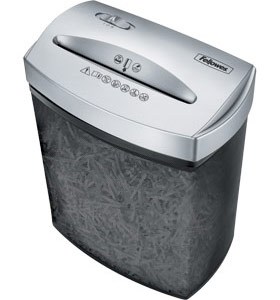
My parents and I were recently talking about ID theft and shredding over dinner. My father’s company purchased a Cross-cut Office Shredder from ShreddingMachines.co.uk to shred all sensitive information on site. This sensitive information includes corporate information such as invoices and pre-printed company letter paper but also the personnel files of his employees.

My mother works in the HR department for a much larger company so a vast majority of the documents that needed to be shredded relate to individuals who work at the company. This includes their names, addresses, home telephone numbers, bank account details and many other pieces of information that you wouldn’t want to fall into the wrong hands. I asked how this information was shredded and expected one of 3 answers:

1. Each member of staff has their own personalised shredder
2. There was a large centralised shredder for each department
3. A specialist company comes and does the shredding for them on site

The actual answer left me stunned. They got another company to shred all of her documents FOR FREE! They put all of the documents that need to be shredded into bags and then these are left in a room for the company to collect. The company would arrive every Friday to collect the bags and take them away with them.

I asked why the company didn’t charge any money for this service and was told that it was because they make their money from selling the paper. I asked how she knew that the paper had been shredded and she very proudly told me that they received a certificate through the post a few weeks later confirming that the paper had been shredded!

I could not believe what I was hearing. Sensitive information is left for over a week in bags marked “to be shredded” and are then collected by a company who makes money from the contents of these bags.

There are two problems that I can see:

1. Imagine someone broke into the property overnight and saw these bags. It wouldn’t take a genius to realise that bags marked “to be shredded” contained sensitive and potentially valuable information.
2. What is to stop the company who collects these bags from selling them to someone else and then providing you with a false certificate?

That is not to say that this particular company acts in this way. I have no idea of their name and they may be the most ethical company in the World. However why take the chance? If they could collect the paper and get $5,000 for the recycled value or sell the information for $20,000 then unfortunately there are some members of society that would choose the latter.

Do you know what happens at your company? In the UK companies must comply to the Data Protection Act. The important part is the 7th Principal that states that “Appropriate technical and organizational measures shall be taken against unauthorized or unlawful processing of personal data and against accidental loss or destruction of or damage to personal data”. This is clearly not the case if your information is taken off site. In the US there is no equivalent legislation, however companies are encouraged to self regulate this to ensure that data does not fall into the wrong hands.

This has hopefully made you think about what your company’s shredding policy is.
IT IS OKAY TO ASK!!

It is your personal information that could be at risk and it is your identity that could be stolen so you are allowed to know what the process is. All companies should have a shredding policy in place. If they don’t then why don’t you put yourself in charge of creating one? If your Company has their information shredded off-site then show them this article and see if you can get them to change how they do things.
The golden rule applies in this case as it does with most things in life. If something sounds too good to be true then it usually is!

Sunday, July 24, 2011

Internet Scam Victims - Real Stories

When I first became a scam victim I was embarrassed and did not want anyone to know . . . that lasted all of 5 minutes and then I was angry at so many things . . . the scammers for their greed, the banking system for not giving me accurate information about how long it takes for a cashier's check to clear, the wire transfer company for not having more warnings about these scams in their businesses and for turning a blind eye to the problem.

That is when I KNEW I had to do something.  I started to contact the media in order to get our story out there, and you know what . . . it HELPED!  It helped me to talk about it and get it out there, but it also helped so many other people.  My phone was ringing off the hook from people saying "The same thing happened to me" or from people who heard our story in the media in time for them to know the situation they were about to enter into was a scam and it saved them thousands of dollars.

If you are a scam victim, you could do the same thing for someone else.  I am contacted by the media in a regular basis asking for help in locating recent scam victims who would be willing to share their story.  Wouldn't it be wonderful to know that you saved someone else from going through the living hell that becomes your life when you discover you are a victim of a scam.

If you would like to be able to help to educate people about scams and fraud, and possibly save someone from becoming a victim, please email me and I will work to connect you with a media person that will do your story justice and help us to take a step forward in educating people about these scams.

Also, you can connect with me and follow our updates from http://www.retaggr.com/page/ShawnMosch/

Sunday, July 3, 2011

Guest Blog and Scam Warning

Today I am sharing a blog post written by my good friend Denise Richardson

If you are looking for work-at-home opportunities --you may have already come across this deceptive marketing website dressed up as an investigative news site. A number of scam websites try to make themselves look legitimate through the use of bogus claims and website scripts that detect where visitors are browsing from and update portions of the site to mention their towns or cities.

Unfortunately, some websites try to take things one step further and attempt to pass themselves off as sources of legitimate news in hopes of tricking those who are looking for legitimate opportunities. It appears that The Consumer Warnings Weekly site at ConsumerWarningsReport.com does exactly this; it masquerades as a consumer website that purports to separate the scams from real opportunities, all the while being disguised as an investigative news organization.

The Consumer Warnings Weekly site features information about fake consumer investigations which claim to reveal a work-at-home program that isn't a scam, and further claims that the one the site promotes has worked for people in the visitor's hometown. Included are pictures of checks and a variety of comments which are most likely fake, along with "endorsements" from major news organizations such as CNN and MSNBC which are either taken out of context or are completely fake. Pictures on the site are stock photos, taken from free photo libraries and other websites to try and give the site the look of a more professional operation. Even the advertisements on the page are fake, directing users to other portions of the scam site when they think that they're clicking on an ad to learn how to avoid online scams. To top it all off, the site even features a Facebook "Like" button so that unsuspecting visitors can share the scam with their friends and potentially draw in more victims.

Of course, if you scroll all the way down to the bottom of the website then all of this is revealed to you in fine print. An "Important Consumer Disclosure" is located at the bottom of the page where many websites print their copyright information, obviously with the hope that it will be ignored by a number of visitors who routinely ignore similar text on other sites. This disclosure reveals that the site is in no way affiliated with any news outlet and that the story presented is only loosely based on an actual story. It goes on to reveal that both the comments and pictures are bogus and that the page receives compensation for any ad clicks or purchases made while on the site. To quote the disclosure, "I understand this website is only illustrative of what might be achievable from using this/these products, and that the story depicted above is not to be taken literally."

A number of websites and products use fictionalized accounts of what their product may be like to avoid having to pay endorsement fees, but few of them attempt to pass themselves off as consumer news reviews. The way that the site presents itself is intended to trick users into thinking that they've stumbled upon a legitimate opportunity when the disclosure itself states that results like those presented on the site may only occur with the top 1% of users of the program.

A number of savvy opportunity seekers will see through the site almost immediately because they've seen similar scams and know to avoid them. Unfortunately, not everyone who's searching for a way to make money at home will be as experienced in avoiding work-at-home scams. These are the people that the Consumer Warnings Weekly website is aimed at, those who will see supposed endorsements from major news networks and assume that the site is a legitimate opportunity instead of being nothing more than a scam.

-----------------

Denise is the author of the book Give Me Back My Credit

Wednesday, June 15, 2011

The benefits of using Cross Cut Shredders

Today we have a guest blog post to share with you from Chris at http://www.shreddingmachines.co.uk/


The benefits of using Cross Cut Shredders 

Identity Theft is a buzz word in today’s World with endless mailings and adverts telling you to shred sensitive information that you don’t need (remembering to keep documents required by the tax man) and to take out an ID Theft insurance policy. Doing these, they lead you to believe, will protect you from ID Theft and let you lead a happy scam-free life.

However what they don’t tell you is that not all shredders will keep your information secure. When purchasing a shredder you need to choose between a “Strip” or “Cross” cut model. Strip Cut (or Ribbon Cut) models shred your documents into long strips of a certain width (depending on the model). If someone had the time and patience they could piece together your document and read the contents. Cross Cut (or Confetti/Particle/Crypto Cut) models shred your documents both length and widthways leaving you with small particles that look like confetti. Depending on the security level of the machine you could end up with between 300 and 1500 tiny pieces of confetti from each piece of paper that you shred. This makes the final information much harder to piece together for a potential criminal. Can you imagine trying to join together pieces of confetti only a few millimetres in width and length to recreate a document, particularly if that document has been shredded along with others?

Any shredder owners out there will tell you how annoying it is to constantly empty the bin of your shredder. Fortunately Cross Cut shredders will cause the shredded waste to compact into the waste bin more than Strip Cut models meaning that the bin has to be emptied less frequently. This all seems to mean that Cross Cut shredders are the best thing since sliced bread, however, as with everything; they do have some disadvantages as well.

The first of these (and probably the most important) is that due to higher manufacturing costs, these machines are usually more expensive than the equivalent strip cut models and in some cases can be over double the price. Another drawback is that the higher the security level of the machine (and therefore the more shredded pieces you get from each piece of paper), the fewer sheets can be shredded at one time. An office level Strip Cut machine may be able to handle 30 sheets at once, but an equivalent Cross Cut model may only be able to handle half as many, meaning more time spent standing at the shredder and less time doing something constructive!

Unfortunately the downsides don’t end there. Due to the special nature of their cutting blades, Cross Cut shredders need to be oiled with special lubrication oil on a regular basis to prevent the machine from jamming or shredding even fewer sheets per pass. A busy office would find it necessary to oil at the start of every day, although occasional home users can get away with only doing so once every month. The final downside can be found out by trying to empty a Cross Cut shredder into an outside bin whilst it’s windy outside. Having done this myself I can confirm that the result is a disaster! Waste sacks can also be purchased but this will further increase the cost.

Fortunately there is help with these costs as UK users can visit ShreddingMachines.co.uk where you will find various special offers that give you Free Shredder Oil and Free Waste Sacks (on certain models) so that the cost of switching to a Cross Cut shredder is reduced. They have some of the lowest prices in the UK around and a unique Shredder Wizard will help narrow down the machine that would meet your individual needs.

Non-uk users looking to buy a shredder could check out the wizard to choose your model (as most models are available across the world) then do some research in your home country to find the best price.

Wednesday, June 8, 2011

Better Business Bureau Tips for Consumers - June addition

The BBB sends out tips for consumers, and here is their June addition.

BBB Advice on Avoiding Wedding Scams

Love is in the air as many couples prepare for their long-awaited wedding day this summer. When preparing for the big day, the Better Business Bureau of Minnesota and North Dakota (BBB) advises people to proceed with caution when it comes to buying a wedding dress online, choosing a photographer and selecting a wedding planner. Doing so will help you ensure your wedding goes off without a hitch.

Asking for referrals and doing a little research can make a big difference in helping your special day go smoothly. Last year alone, the BBB received more than 970 complaints against wedding-related businesses. Services like wedding planners, bridal shops, car or limousine rentals, DJs, wedding photographers, florists, and jewelers all made the list. Many of the common complaints were centered on the company’s unwillingness to honor cancellation and refund policies after a deposit had been paid.

From choosing a florist to picking out the perfect wedding gown, more and more couples are opting for online retailers. While most venues have the brides’ best interest at heart, it’s important to recognize the danger signs before shelling out hard-earned cash to unreliable businesses.

“With the cost of today’s wedding averaging around $28,000, you want to make sure you get everything you pay for,” said Dana Badgerow, president and CEO of the BBB. “It’s important to do your research before securing your wedding vendors and paying any upfront fees.”

The BBB recommends couples consider the following when planning for their special day:

Research all online vendors. When choosing to go with an online retailer for your wedding services or products, start with a trusted site rather than shopping with a search engine. Search results can often lead you to unscrupulous websites or phishing scams.  Also, look for the BBB seal and other widely-recognized “trustmarks” on retail websites. Click on the seals to confirm they’re valid. Confirm that your online purchase is secure by looking for the “s” after “http” in the URL or the lock symbol in the lower right-hand corner of the screen. Be sure to check the company out with the BBB at www.bbb.org before doing business with them. 

Review all terms and conditions. Whether you’re dealing with an online firm or a brick and mortar store, review the terms and conditions of the contract carefully. What are the company’s refund and exchange policies? What is their cancellation policy?  What happens if the company can’t hold up their end of the bargain?  Who will perform the service on your special day? Be sure you understand your rights as a consumer before doing business with the company. 

Keep documentation of your order. For online orders, save a copy of the confirmation page or e-mails confirming the order until you receive the item or service and are satisfied. If you’re dealing with a company representative in-person, be sure to get all details in writing, including specific dates, products, prices, cancellation and deposit policies and signatures from both parties.

Pay with a credit card. Credit cards offer consumers the added protection of disputing any charge over $50 within 60 days of the purchase. Most established businesses accept major credit cards, so use them whenever possible, including payment for deposits Shoppers also have dispute rights if there are unauthorized charges on the card, and many card issuers have “zero liability” policies if someone steals your card number and uses it. Never wire money.

Consider purchasing wedding insurance. Wedding insurance can cover a range of prospective problems including vendor no-shows, cancellations, inclement weather, military deployment, medical emergencies, travel delays and more. Many policies start at $200 and can potentially save you thousands of dollars.

For more consumer tips you can trust, visit www.bbb.org/us/bbb-news.

Tuesday, June 7, 2011

Breaking down what MN HF0343 will really do for you

I know that a lot of you who read this blog and come to our website do so because you consider yourself the “average consumer” and know you can come to us to get the real information on things, without all of the legal or technical terms that only end up confusing you even more.  Recently I told you about Minnesota Bill HF0343, but let's look at it even closer.

Yes, you can do a search for Minnesota Bill HF0343 and find the online information, which allows you to read the bill text as it was introduced. Let me save you the time of searching . . . just click here and here for the State's information on this Bill.  Unless you have a background in law, you might read this and say “So what does that really mean, for me?”

In 2007 the MN Department of Alcohol and Gambling started a website called http://www.mnscams.org/ Why is the Department of Alcohol and Gambling even interested in scams and fraud? When Minnesotans were becoming victims of Lottery Scams, they began to reach out to the Minnesota Department of Alcohol and Gambling for assistance. In the video below you can watch an in-depth report on the great lengths that Minnesota law enforcement went to in order to track down these scammers.


This Bill would give the Department of Alcohol and Gambling greater power to subpoena and increase the variety of variations of these scams that the Department would have power to then go after.

This Bill will focus in on money transmitters, like Western Union and Money Gram, would have to have a anti fraud program, including a background check of agents and employees. This will raise the bar for these companies, and force them to look at the way that all of their authorized location are operating, and if one of those location are not upholding the rules and standards set forth, the company can be held accountable. If you have read up on scams and fraud, you have heard the stories of the employees working in a variety of businesses that have “turned a blind eye” to the fact that there are fraudulent transactions filtering through their company only to say “there is nothing we can do about it”. Even worse, there are cases when the employee is actually profiting from the scam.

In 2009 the FTC investigated Money Gram on charges that it allowed their system to be used for fraudulent activity. Money Gram ended up paying $18 million to settle.  According to the FTC, Money Gram was aware of the issue and turned a blind eye to the problem. There are many variations of the scams, and while businesses that carry out wire transfers do normally have information about these scams on their websites or on the bottom of their transfer forms, in very small print, these are normally not things that the average customer will see before they become a victim. This Bill will force for more attention to be put on this issue on the defensive side by spotting the warning signs and helping the customer to see them also. Really, it is about good customer service.

The part of this Bill that I am most impressed with is the portion that addresses that the money should go to who you designate on the form, and that they must pick it up where you designate. Now this might sound obvious . . . of course you want the money to go to the person you intended for it to go to, and to where you sent it, but it is not that simple. Right now, if I send money via wire transfer to Joe Schmo in Dallas, Texas and someone else knows the Wire Transfer Number and the Secret Question and Answer, they can pick up that money in any location in the world without having to show valid identification.   The Better Business Bureau pointed out this fact in one of their warnings on this type of scam.

How is this possible?!?!?! Well, here is the reasoning behind this “loophole”. What if my friend Joe Schmo had his wallet stolen, so he did not have any valid identification with him that he could show, and he needed that money to pay his bills. Joe would need a way to “prove” that he knew about the wire transfer and that it was intended for him. If I give him the Wire Transfer Number and tell him what the Secret Question and Answer are, he will now have that information, right? Problem solved. Wrong! Now you have just created a NEW problem. What if someone who is not Joe gets a hold of that information? They too can now go and pick up that wire transfer anywhere in the world, and once the money is picked up the transfer cannot be reversed . . . the money is gone.

The scammers understand this, and they use it to their advantage. They can use a pretend name and tell you that they live within the United States. They can tell you that you are sending the money to someone that is their accountant, client or shipping company . . . whatever fits their story that they have used to bait you into this scam. All of the warning signs of a scam alert you to sending money overseas, but you are just sending money to a shipping company in New York, so what do you have to worry about. This Bill would help to close that loophole and require that your money is only being sent to who you designate and that they are where you designate that they are.

It is sad that the scammers know all of this information better than the average American, but this is why these scams work so well. Besides the truth about how the money transfer businesses work, another point that the scammers seem to be better educated on than the average American is how the check clearing process works.

This is why we at Scam Victims United have been working since 2002 to educate people on scams and fraud, and especially the real way that wire transfers and check clearing works. Education is the key to fighting these scams, and you can sign our petition asking for the creation of Scam Education and Awareness Programs.

http://www.change.org/petitions/create-scam-education-and-awareness-programs

Monday, June 6, 2011

Survey

I put out the request for people to take a survey the other day, and it seems like there was a "glitch" in the system that would not allow some people to complete the survey.  I spoke with the person in charge of the survey and it has been fixed.  The survey can be accessed here.

http://survey.scamresearch.info//43356/lang-en

Saturday, June 4, 2011

Survey on Scams and Fraud


A post-graduate researcher has asked us to help them with a survey they are doing.  I have personally taken this survey and feel it is safe for all of you to take, otherwise I would not even ASK for your help.  It does NOT ask for any personal information at all, just some questions on your feelings and thoughts on different real life situations.

Here is a link to the survey
http://survey.scamresearch.info//index.php?sid=43356&lang=en

And here is a link to some more information on the person doing this research if you are interested
http://scamvictimsunited.com/phpBB2/viewtopic.php?f=19&t=6529

Thank you for your help!  Please spread the word to other scam fighting websites that you know.

Sunday, May 22, 2011

What's your story?

I am being contacted by media personal, and I want to have a little info about people that may be willing to speak with them about why the topic of scams and fraud is so important to them. I was thinking of "sorting" them by states, since I usually get a media contact that wants someone in their state.

If you would be willing to speak to a media person about YOUR PERSONAL connection with the topic of scams and fraud here is an example of what I am looking for . . . mine would read like this

Shawn and Jeff Mosch
full mailing address for contact
best phone number for them to contact you at
best email address to contact you at

Summary:
Shawn and Jeff Mosch are scam victims turned Victim’s Advocate who work to educate people about internet scams. After their personal experience with a counterfeit cashier’s check scam in 2002, they found a lack of information and resources available at the time. This was the motivating factor in creating their website, ScamVictimsUnited.com. They continue to be passionate about this issue and work with other agencies to bring more awareness to the topic of scams and push for laws that will help to protect people from these scams.

--------------------------

It does not need to be long . . . if you were a victim it can just be the type of scam you were a victim of, when it happened and how much you lost.

DO NOT POST YOUR INFO ON A MESSAGE BOARD ON IN A COMMENT TO THIS POST SINCE IT WILL INCLUDE YOUR CONTACT INFO!
Please send it directly to me from my blogger contact info http://www.blogger.com/profile/00668897360179366316
or contacting us through the Feedback page or our site which goes to our main Admin email address.
http://scamvictimsunited.com/feedback.htm

If you could put Summary and your name in the subject line that will help me find them all in my inbox

Thanks!

Thursday, May 19, 2011

More on MN Bill HF0343

Things have been so busy I feel like I have neglected my scam fighting blogger friends.  I did want to give you a quick update on a topic that is very dear to my heart . . . laws to protect scam victims.  As anyone who has read my story, website, blog or who has any interaction with me personally in the past 8+ years since I have started down this road of scam education and awareness knows that I am passionate about this issue.  I have been asking for laws to be changed from day one.  In the beginning, people just laughed and said that there was no way to change those kinds of laws or do anything to help scam victims, but that did not make me give up . . . I just kept talking to different people until found someone that DID listen to me. 

Then things started to turn around.  I was able to speak with someone at Senator Franken’s office and they really listened to what I had to say.  We had several phone and email conversations, bouncing ideas off of each other.  Then around the same time I was asked by AARP of Minnesota and the BBB of Minnesota to come to a meeting that they were having to look at legislation that could help scam victims, or better yet, protect people from BECOMING scam victims.  I could not believe it . . . things were falling into place.  At that meeting I shared all of the ideas that my husband Jeff and I had from day one of beginning our site.  I told them that I am not a legal expert, but I know what would have saved us, and the people that come to our website for assistance, from becoming scam victims.  I showed them the “loopholes” that I saw in the way that things were currently run, with both banking institutions and money transfer companies.  I said that if they could close these loopholes, we could dramatically reduce this type of scams.

So I made sure that my contacts at the BBB, AARP and Senator Franken’s office all were connected to each other, and then I waited.  There were a few more emails and conversations, but after a while things kind of stopped going and I wondered if the whole idea fell through.  Then, at a Fraud Fighter’s Forum organized by the Minnesota AARP I saw it for the first time . . . HF0343.  If you would like to read the Bill, you can do so at this link.  https://www.revisor.mn.gov/revisor/pages/search_status/status_detail.php?b=House&f=HF0343&ssn=0&y=2011

Many of the items in this Bill are things that I have been talking about for years, so to see it becoming a reality was HUGE for me.  There are other scam fighting sites out there that are also backing this bill.  I think that is great that we can all join together on one common issue.  It does not matter who told you about HF0343, just that you know about it, and that we get it passed.  If it passes in Minnesota, we can then all work together to see it get passed in other states.

I was also able to be at a recent hearing about this Bill, and I shared with everyone there why I am so passionate about this issue and that if this Bill would have been law in 2002, I would not have been sitting in front of them speaking to them as a scam victim . . . if this Bill works as it is written, it would have saved my husband and I from becoming victims.

Also, there are some that have recently accused me of “stealing their thunder” and I believe most of it is due to a recent post I made telling all of you about this bill and asking you to send letters in to the authors.  This other group was asking people to send in letters, and instead of “re-inventing the wheel” I passed that information on to all of you.  I felt that I could do this because

1)      I also had been working with the same groups mentioned in the context of the letter
2)      I also feel passionately about this topic
3)      This group was asking for help in getting the word out
4)      Had I know that letters to the authors would “help” I would have put the word out a LONG time ago

To me, scam fighting and changing the laws is not about who “gets credit” for it . . . it is about all of us working together for the best outcome.  If I have some good info, and you want to share it, go ahead . . . share away!  That is how we get the word to spread and educate more people.  

Tuesday, May 10, 2011

Hearing on bill

If you are in Minnesota and can attend, there is a hearing on a bill that could help scam and fraud victims
Commerce and Regulatory Reform

WEDNESDAY, May 11, 2011
2:30 PM
Meeting Time Note: The committee will meet until 4:30 p.m.
Room: Basement State Office Building
Chair: Rep. Joe Hoppe 
Agenda: HFXXXX (Hoppe) Telecom Access Reform
 HF343 (Atkins) Identity theft and related fraudulent activity enforcement capabilities enhanced.